





Squat Rack vs. Smith Machine vs. Functional Trainer
You’ve spent three months researching home gym equipment. Bookmarked twenty reviews. Queried every "gym-bro" in your circle.
And you’re still confused.
One says a squat rack is the only answer: "No free barbell? Then you're not even lifting."
Another swears by the Smith machine: "You're training alone. Safety first. Don't gamble with your life."
Then another voice says a functional trainer is the future: "Infinite exercises. You'll never get bored."
Who's right?
Here's the truth: They're all right. And they're all wrong.
It's not that these machines are bad. It's that you haven't yet figured out what kind of athlete you actually are.
This guide ends the debate. No specs thrown at your face. No fluff. Just a direct, honest breakdown of squat racks, Smith machines, and functional trainers – based on your training style, space, budget, and where you want to be in two years.
When you're done reading, you'll know exactly which machine belongs in your home gym.
Part 1: What Are These Machines, Really?
Most people pick the wrong machine because they don't understand what each tool is actually designed to do. Let's fix that.
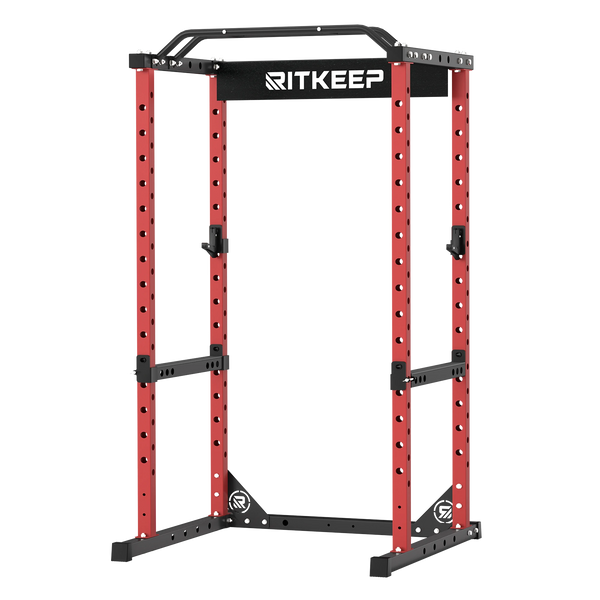
1. Squat Rack (Power Rack) – The Fortress of Free Strength
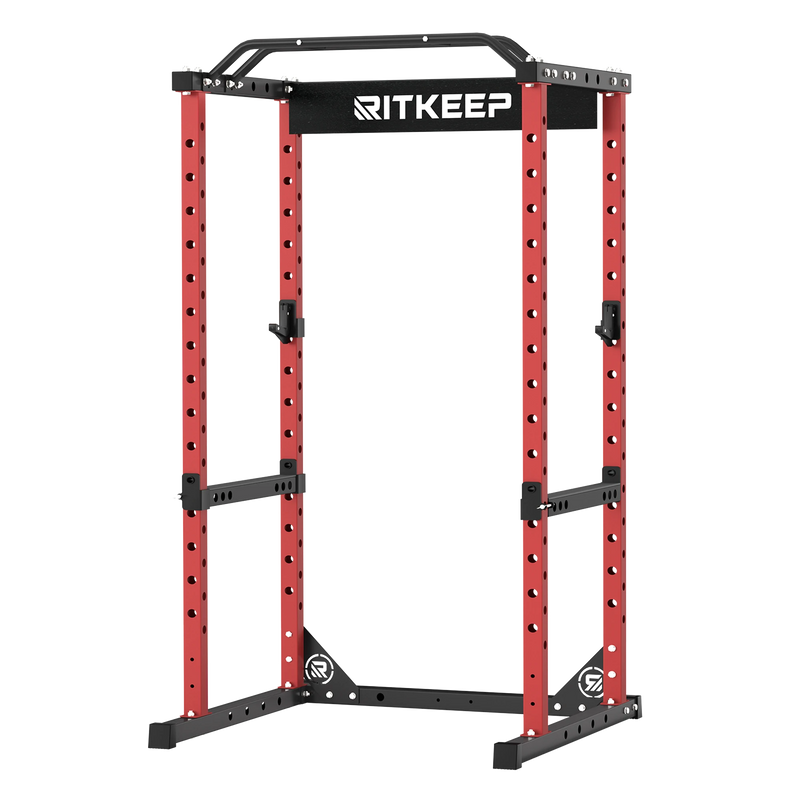
A squat rack – also called a power rack or power cage – at its core, does one thing: it allows you to safely and alone perform squats, bench presses, deadlifts, and overhead presses with a free barbell.
Four vertical posts. Adjustable J-hooks to hold the bar. Adjustable safety arms to catch a failed rep.
What makes it great: Freedom. The bar has no guide rails. Your body finds its own natural path of motion. Stabilizing muscles fire with every rep. This is the closest you'll get to "real-world strength" from a machine.
What you can add: Pull-up bars, landmine attachments, dip stations, even cable pulley systems.
One-sentence summary: If "200 kg squat" is on your wall, the squat rack is your only real option.

2. Smith Machine – The Airbag for Solo Lifters
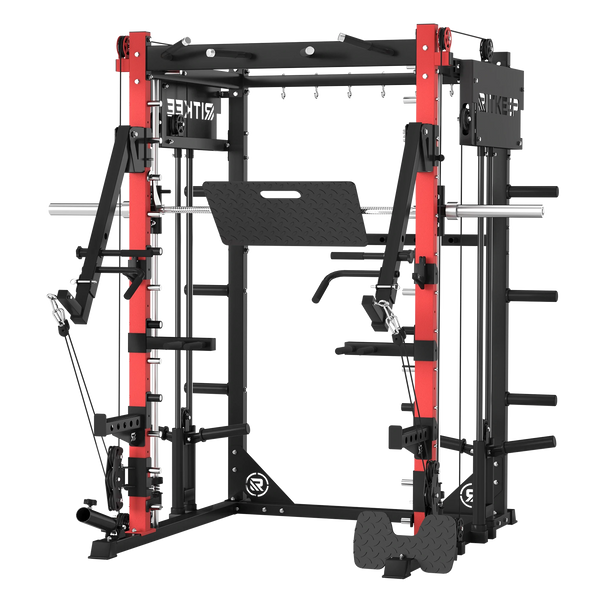
The Smith machine fixes the barbell to vertical guide rails. It only moves up and down. Most also have safety catches – twist your wrist, and the bar instantly locks into place.
What makes it great: Maximum safety. You'll never get pinned. You'll never panic. It's the most beginner-friendly strength machine you can buy.
What it doesn't do well: The fixed path of motion means fewer stabilizing muscles work. If you can squat 100 kg on the Smith machine, you'll likely struggle with 80 kg on a free bar. Strength transfer is real – and limited.
One-sentence summary: If you train alone, fear injury, and want every session to be safe – the Smith machine is your safety net.

3. Functional Trainer – The Infinite Playground
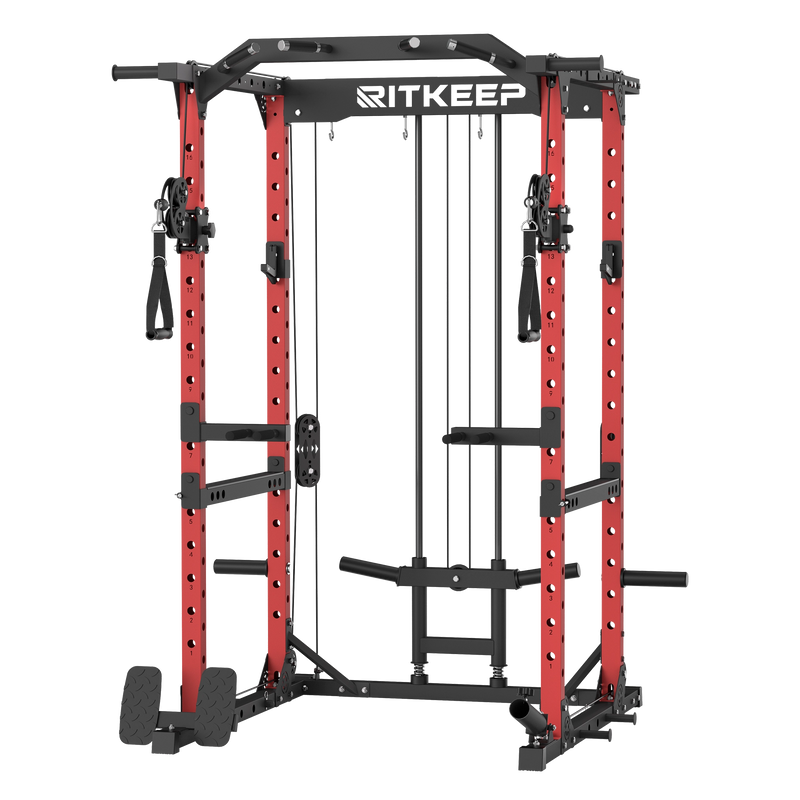
A functional trainer has two tall columns, each with an adjustable pulley that moves up and down. Resistance comes from built-in weight stacks, not weight plates.
What makes it great: Unlimited exercises. Chest flies. Face pulls. Lat pulldowns. Rotational chops. Bicep curls. Hip thrusts. If you can imagine an angle, this machine can probably hit it.
Even better: cables provide constant tension. Free weights lose resistance at certain points in a movement. Cables don't. This constant tension is a huge advantage for muscle isolation and growth.
One-sentence summary: If you're tired of the same old barbell and dumbbell exercises and crave variety in every session, a functional trainer will keep you motivated to train.
Part 2: Four Crucial Comparisons – Who Wins Where?
Let's compare these three machines directly. You'll quickly see: it's not about "which is better." It's about "which is better for you."
Comparison 1: Movement & Muscle Activation
- Squat Rack: Free movement → stabilizers fully active → best strength transfer to sports and daily life.
- Smith Machine: Fixed movement → less stabilizer work → still effective for hypertrophy, but strength doesn't transfer as well to free weights.
- Functional Trainer: Every angle + constant tension → maximum isolation → best for muscle growth and movement variety.
Example: You want to build your chest.
- Squat Rack: Barbell bench press – Your core, shoulders, even your legs work to stabilize.
- Smith Machine: Fixed bench press – just press.
- Functional Trainer: Cable flies – your chest stays under tension throughout the entire rep.
All three build chest muscle. But they feel entirely different – and deliver different results.
Comparison 2: Safety – Especially if You Train Alone
- Smith Machine: Safest. Hooks lock instantly. No pinning scenario. Best for beginners, rehab, or anyone training alone with concerns.
- Functional Trainer: Very safe. No risk of getting pinned. Main risk is poor form – an instruction issue, not a machine fault.
- Squat Rack: Safe – with one condition. Set the safety arms correctly, and it's safe. Set them wrong, and it's dangerous. It takes five minutes to learn how. Use those five minutes.
Ask yourself: If it's 11 PM and you're alone, would you attempt a heavy bench press max in a squat rack? If the answer is "no," a Smith machine or functional trainer might genuinely fit your life better.
Comparison 3: Progression & Strength Ceiling
- Squat Rack: No ceiling. Buy more plates, get stronger. From 100 kg to 200 kg, the same rack handles it.
- Smith Machine: Has a ceiling. Weight stacks are limited. The fixed bar path limits how well your strength transfers to free weights. Still good as an accessory or for beginners.
- Functional Trainer: Also has a ceiling. Weight stacks have limits, and cables aren't ideal for true max-effort strength work. But for hypertrophy? Almost no limit. You can vary angles, grips, tempos endlessly.
Key question: Are you chasing a number on the bar, or a look in the mirror? Number = Squat Rack. Look = Functional Trainer. Want both? Read on.
Comparison 4: Space & Budget
- Squat Rack: Compact to full-size options. Folding racks collapse to just 22 inches deep. Most space-flexible option.
- Smith Machine: Fixed footprint. Medium to large. Requires more ceiling height.
- Functional Trainer: Medium footprint, but requires clear space on both sides. Actual usable area is often larger than it looks.
One statistic that matters: According to a 2024 home gym survey (Major Fitness, 500+ users), 38% of first-time buyers regret their main equipment purchase within a year. Top reasons: not enough space, too few exercises, and a mismatch with their training style.
This isn't the equipment's fault. It's a mismatch you can avoid.
Part 3: Quick Decision Guide – Find Your Match in 30 Seconds
| If Your Main Goal Is | Your Top Choice | Budget Range | Space Needed |
|---|---|---|---|
| Powerlifting / Heavy Free Weights | Squat Rack (Power Rack) | $1,500 - $3,000 | Medium to Large |
| Safety + Beginner Friendliness | Smith Machine (with high/low cables) | $1,200 - $2,500 | Medium |
| Variety + Muscle Isolation | Functional Trainer | $1,500 - $3,500 | Medium to Large |
| All Three + Limited Space | 3-in-1 All-in-One Machine | $2,000 - $4,000 | Medium |
Part 4: A 3-Step Decision Tool – Stop Guessing, Start Knowing
Stop asking "which is better." Go through these three questions.
Step 1: What is the core of your training?
Pick one:
- "I want to push my squat, bench, and deadlift to their limits." → Squat Rack
- "I want to train safely alone, without worrying about injury." → Smith Machine
- "I want endless variety, isolation, and to truly enjoy every session." → Functional Trainer
This is your core, not your entire routine. Choosing a squat rack doesn't mean you'll never do cable exercises. Choosing a functional trainer doesn't mean you'll never lift heavy. It's about the priority.
Step 2: How long do you plan to use this machine?
- 2+ years: Choose a squat rack or an expandable system. A standalone Smith machine or functional trainer can start to feel limiting after 12-18 months.
- Unsure / just starting out: Smith machines and functional trainers are beginner-friendly and retain resale value. If you choose a Smith machine, get one with high/low cable attachments – otherwise, you'll run out of exercises quickly.
Step 3: What do your space and budget actually allow?
- Plenty of space, budget €2,000+: Squat rack + separate functional trainer. This is the gold standard. No compromises.
- Limited space, budget €800 - €2,000: Folding squat rack + cable attachment, or Smith machine with integrated cables. This is the most practical, popular setup.
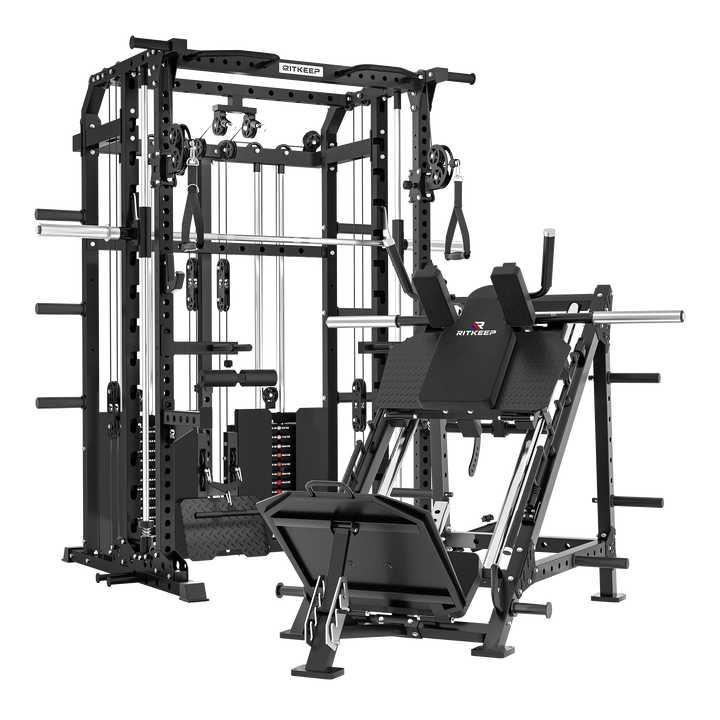
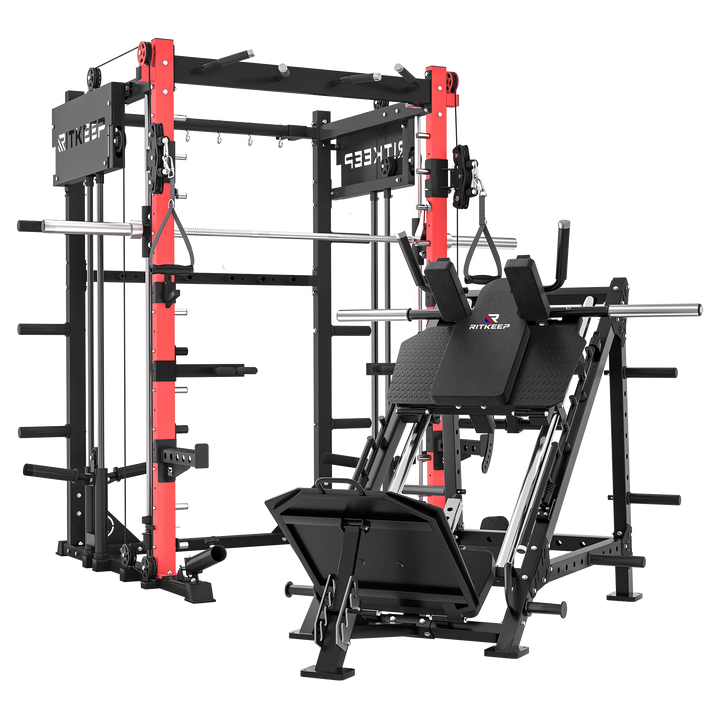
- Very little space, want one machine that does almost everything: 3-in-1 all-in-one machine. One footprint gives you a squat rack, Smith machine, and functional trainer. Downsides: Installation is heavier, and some extreme movements (like ultra-wide, heavy bench pressing) can feel a bit cramped. For most home gym owners, this is the "one machine to rule them all" solution.
Budget too tight for a 3-in-1 machine?
If your budget is under €800, don't force a big purchase. Start with a foundation that won't waste money:
Start with this: Adjustable dumbbells + folding bench + resistance bands.
This combination covers pushing, pulling, squatting, and hinging movements – enough for 6–12 months of consistent training. Use this time to figure out your true training style. Then, invest with confidence, not guesswork, in your forever machine.
Budget under €400? Start even smaller
If your budget is under €400, the goal isn't to buy a "forever machine" – it's to start training today and build the habit first:
Start with this: A pair of fixed-weight dumbbells (10–20 pounds ≈ 4.5–9 kg) + yoga mat + resistance bands.
That's it. This combination is enough for 3–6 months of consistent training. You can do pushes, rows, squats, lunges, and core work – all fundamental movement patterns. No assembly. No heavy lifting. No commitment to a machine you might outgrow.
Why this works: The biggest predictor of a successful home gym isn't the equipment – it's showing up. Start small. Build the habit. Then, when you're ready to invest in a rack or machine, you'll know exactly what you need because you've been consistently training. That's the smartest money you'll ever save.
Progression path for ultra-budget beginners: After 3–6 months: If you love the feel of free weights and want to lift heavier, upgrade to a folding squat rack; if you prefer varied, joint-friendly movements, switch to a functional trainer – your consistent training will make the choice obvious.
Part 5: Three Specific Scenario Equipment Lists (Ready to Buy)
Scenario 1: Budget €800+ Apartment (≤6 m² training area)
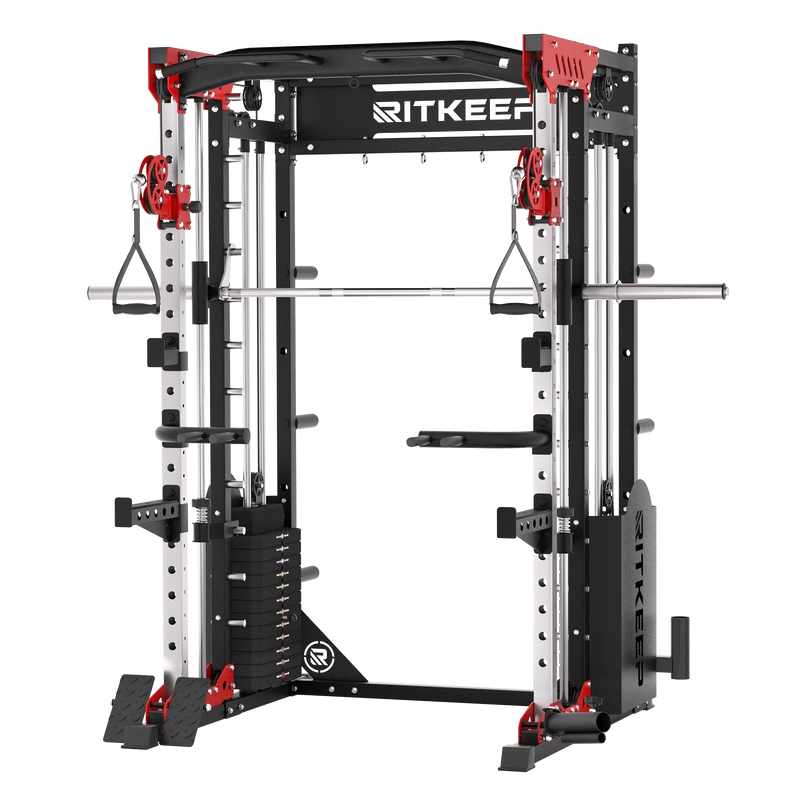
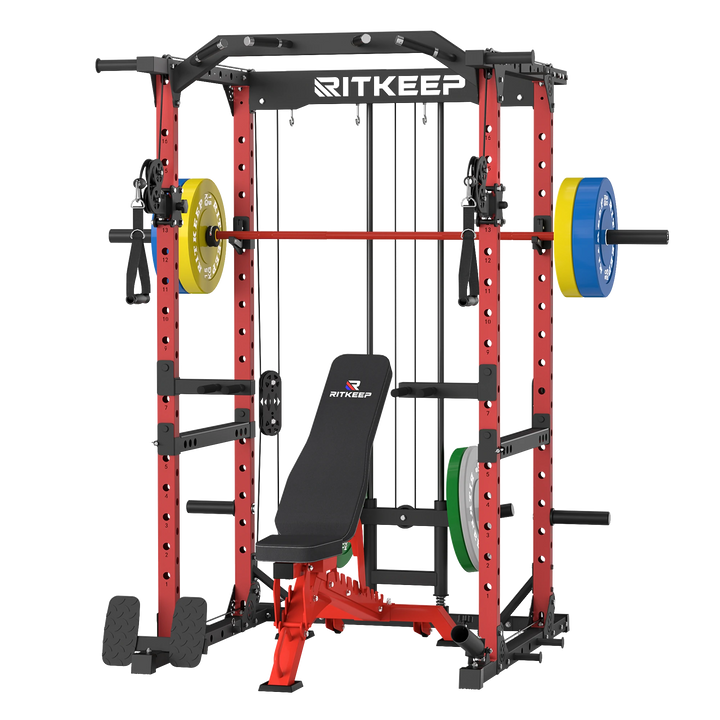
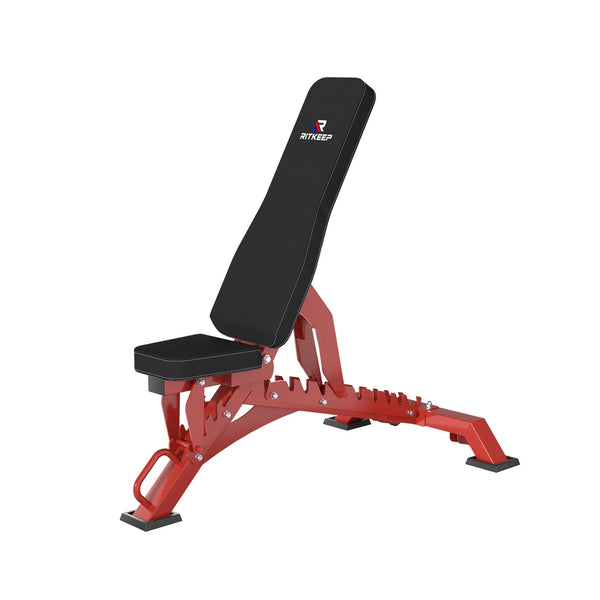
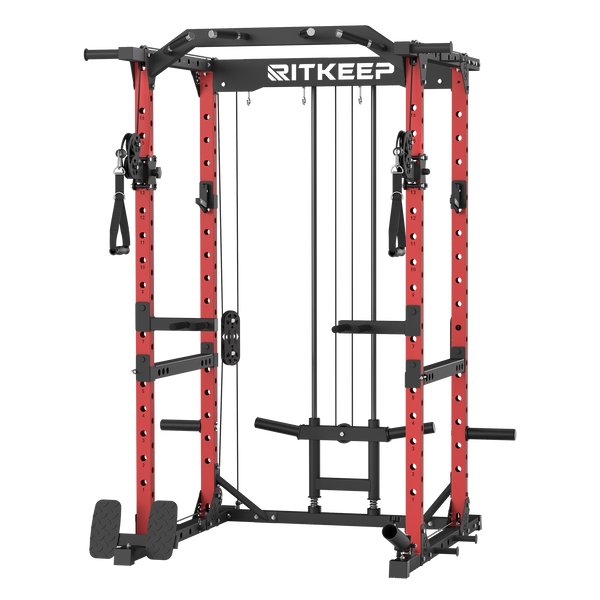
Recommended Setup: RitKeep M10 Power Rack + Adjustable weight bench + 25 kg barbell + 100 kg weight plates
(Note: If you prefer other brands, follow the core combination: power rack + adjustable bench + standard barbell + 80–120 kg weight plates – prioritize stability and load capacity. For heights 180 cm and above, choose a rack with a post height of ≥210–220 cm.)
- Heavy-duty all-in-one rack – ideal for home gyms
- Core exercises: squats, bench press, pull-ups, rows, cable training
- Advantages: Strong and stable structure, supports progressive overload, suitable for serious training
Scenario 2: Budget €1500+ Small Garage (8–10 m² training area)
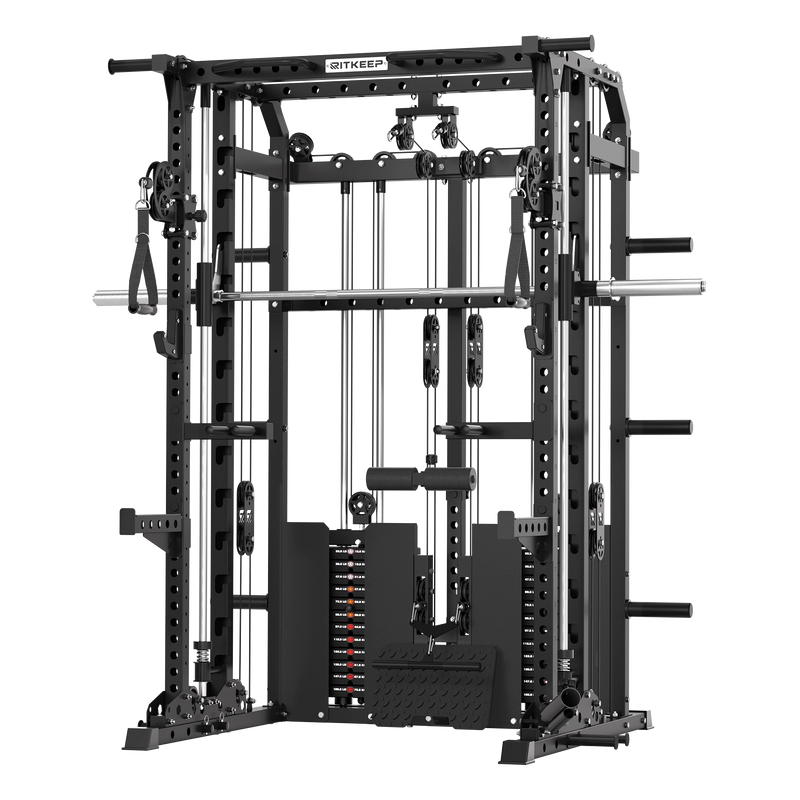
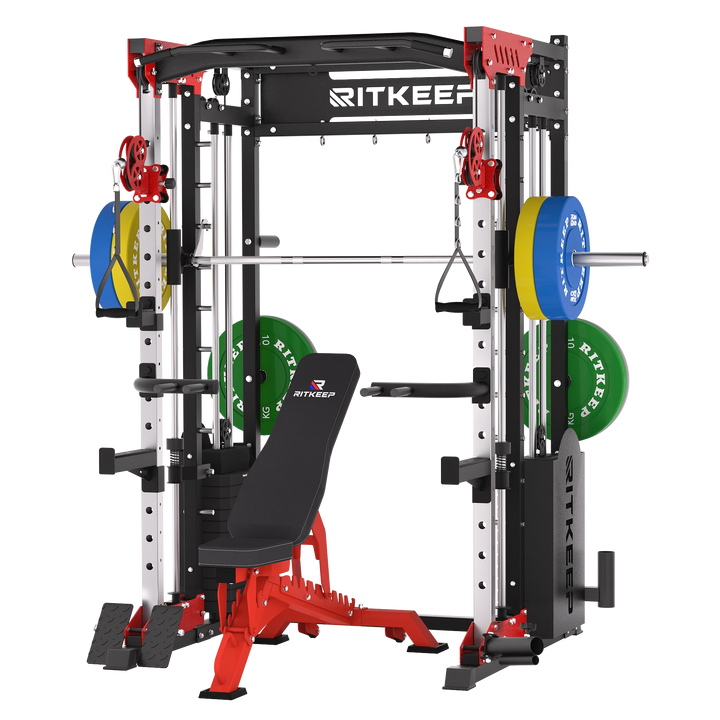
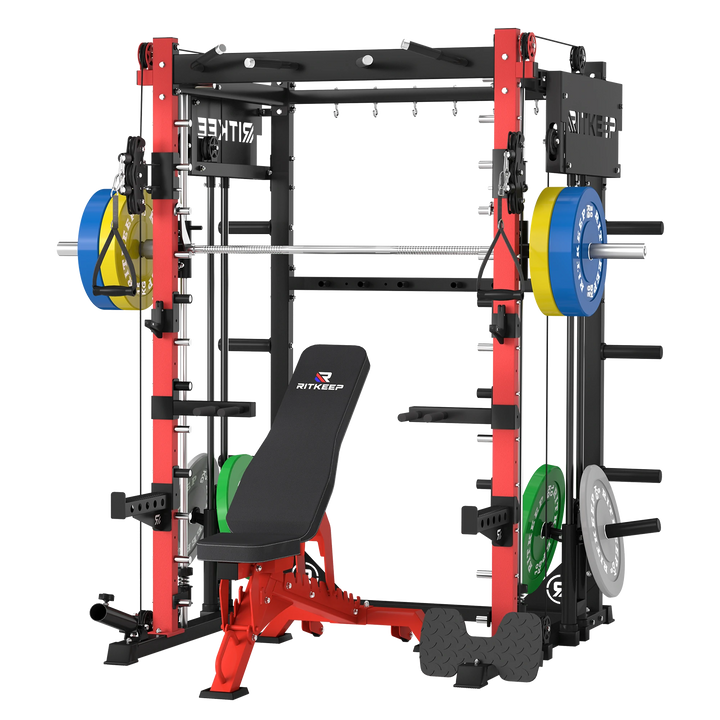
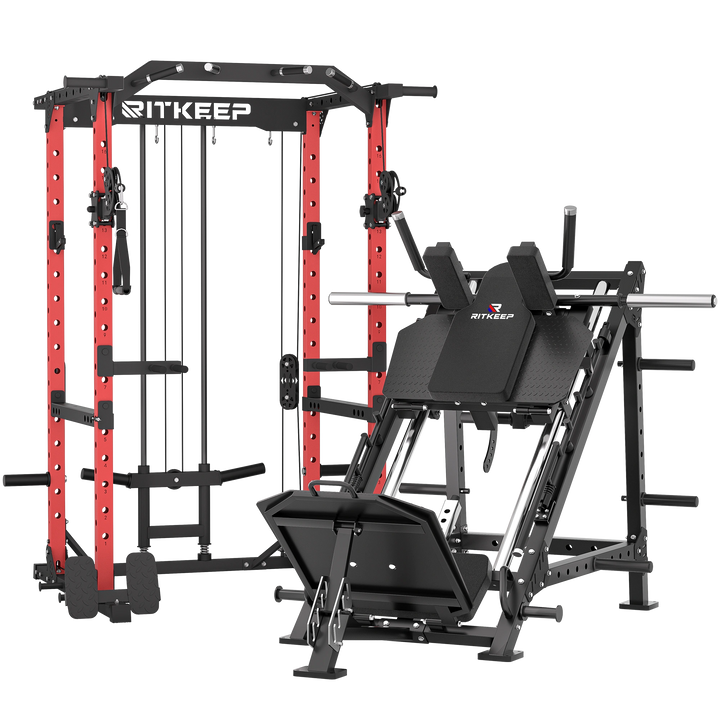
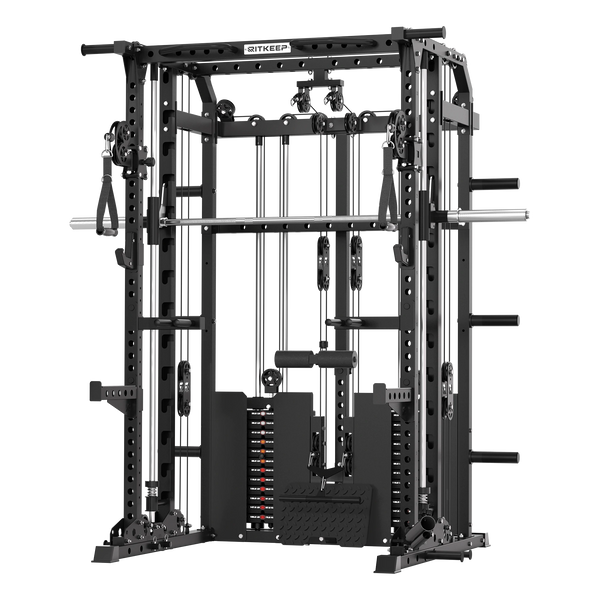
Recommended Setup: RitKeep PMAX 5600 Smith Machine + Dual independent cable pulley system + Built-in weight stack + Adjustable incline bench (positive/negative)
(Note: For brand alternatives, stick to the formula: all-in-one Smith machine + dual cable system + weight stack + adjustable bench – focus on smooth cable movement and versatility. For heights 180 cm and above, ensure sufficient machine height and pull-up clearance.)
- All-in-one system with built-in weight stacks — no additional plates needed
- Dual independent cable system for balanced and versatile training
- Core exercises: squats, bench press (Smith), cable flies, lat pulldowns, tricep pushdowns
- Advantages: Combines guided safety with cable versatility, space-saving, ideal for full-body training without multiple machines
Scenario 3: Budget €3000+ Comprehensive Needs (≥10 m² training area)
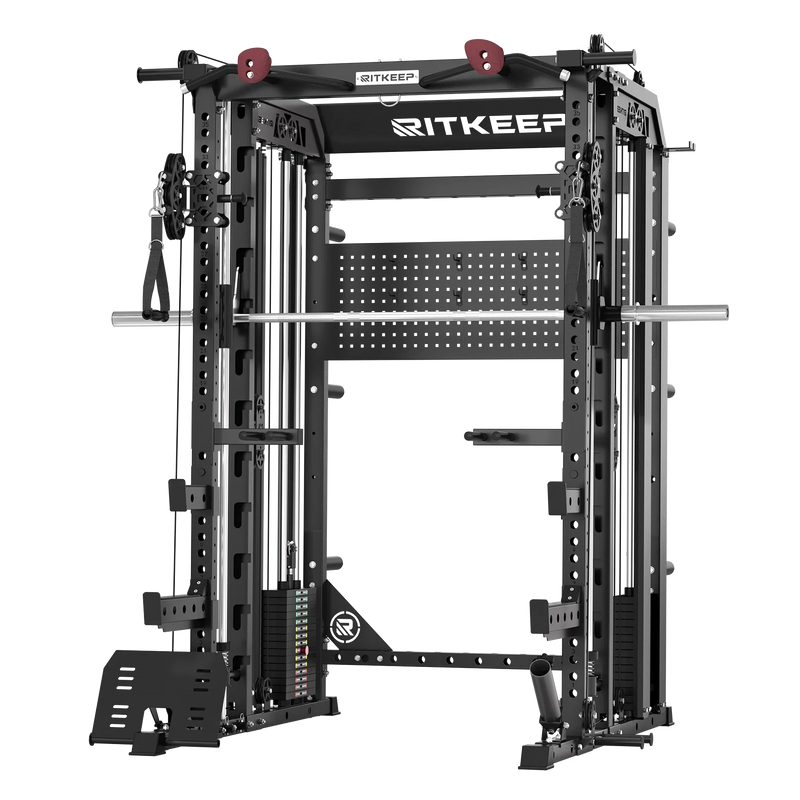
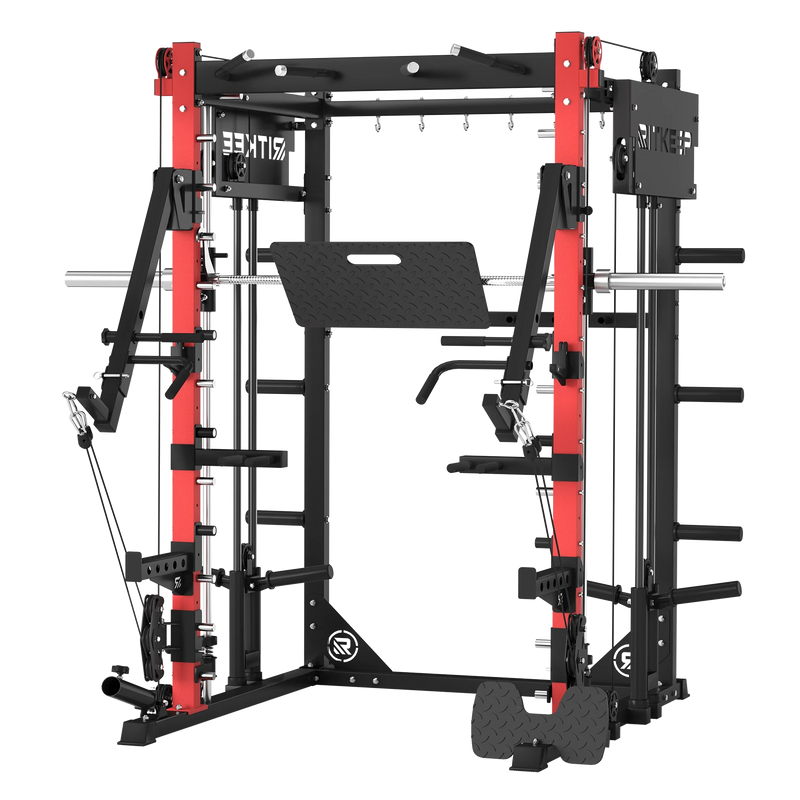
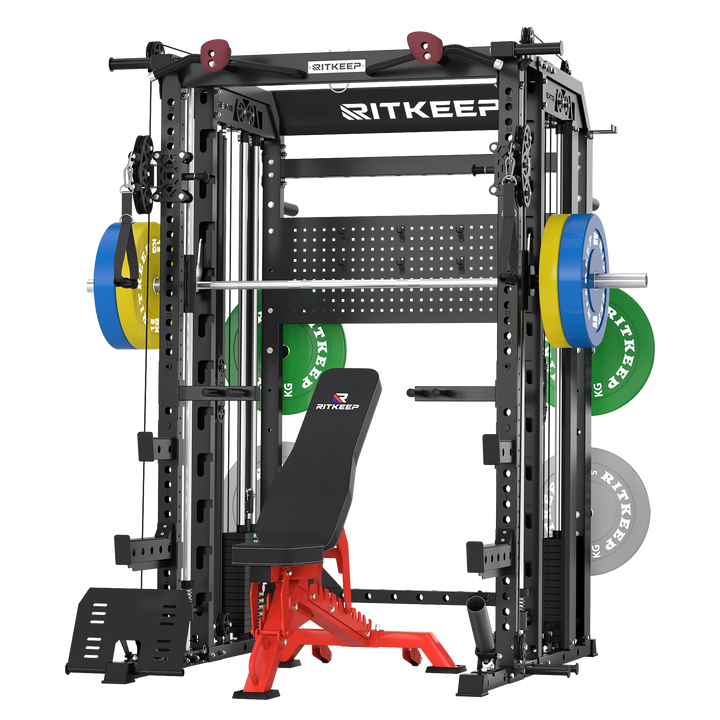
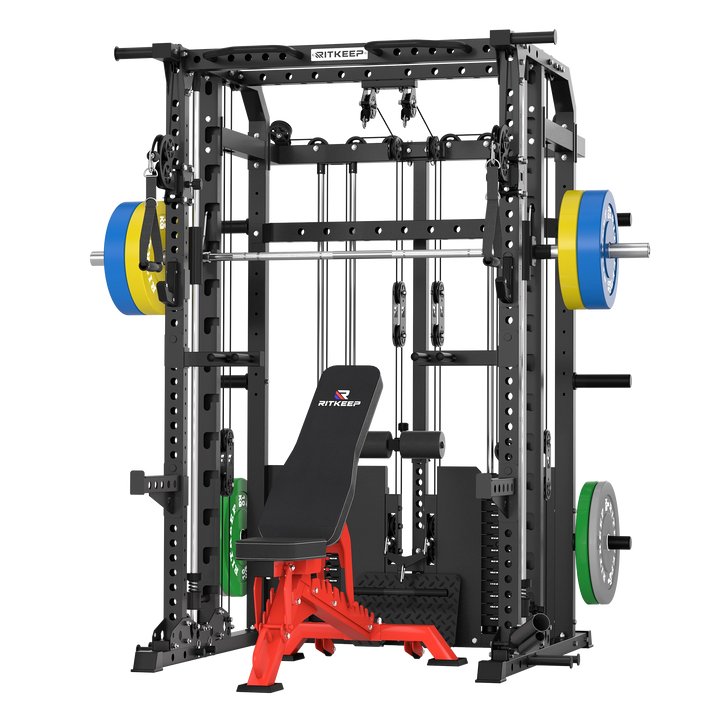
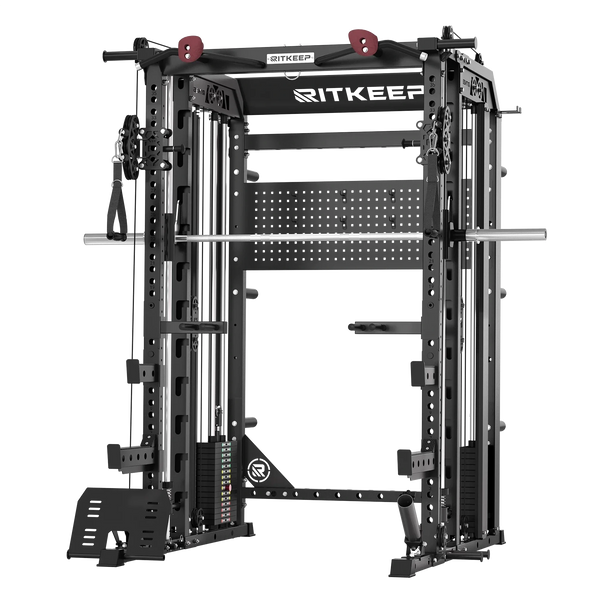
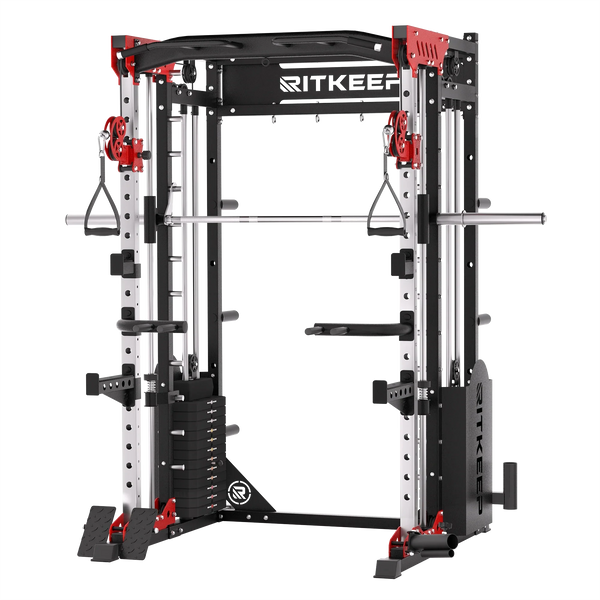
Recommended Setup: RitKeep N1 Smith Machine (All-in-one system with functional trainer + power rack + steel weight stacks)
Part 6: Three Mistakes That Cost Thousands
Mistake 1: "I'll buy something cheap now and upgrade later"
The most expensive home gym purchase isn't the first one – it's the second. Buy too narrow-mindedly, and within a year you'll be selling bulky equipment, losing money, and buying again. Many people simply stop instead.
Advice: Wait another month if you have to. Buy one machine you won't outgrow in two years. It's cheaper in the long run.
Mistake 2: "A functional trainer is too light to build real strength"
Strength isn't just a bench press number. Muscular endurance, explosive power, and movement control are all forms of strength. Professional athletes use functional trainers because they allow you to train angles and patterns that cannot be safely hit with free weights.
If your goal is a stronger squat, yes – you need a squat rack. If your goal is a stronger, more resilient body, a functional trainer earns its place.
Mistake 3: "Squat racks are dangerous for solo lifters"
In fact, a squat rack with properly set safety arms is safer than a Smith machine for some movements. Why? Because the Smith machine locks you into a fixed path that may not match your natural body mechanics. Over time, this unnatural pattern can stress your joints.
The squat rack allows your body to move naturally. The safeties are there to catch you if you fail. The only real risk is not learning how to set those safeties properly. Take ten minutes. Watch a video. Set them correctly every single time.
Part 7: Installation & Safety – What No One Tells You
Installation Tip: Squat racks and 3-in-1 machines typically weigh 150–300 lbs (68–136 kg). Never assemble alone. Get a second person, or choose a brand that offers professional installation. A dropped upright can cause serious injury or damage your floor. Safety starts before your first workout.
Equipment Maintenance Tips:
- Squat racks: Monthly check safety arm bolts and J-hooks – tighten as needed (use a torque wrench for consistency).
- Cable trainers: Wipe pulleys every 2–3 months with a dry cloth; apply a small amount of silicone lubricant if movement feels stiff (avoid oil-based lubricants, which attract dust).
- Smith machines: Weekly check guide rods for debris; keep bar path clear to prevent friction.
- All equipment: Place on a rubber mat to protect floors and reduce noise.
- Used equipment: Prioritize checking squat rack safety arm stability and cable pulley wear; avoid machines with rusty bolts or frayed cables.
Part 8: Frequently Asked Questions You Probably Still Have
Q: I'm a total beginner and training alone. Smith machine or functional trainer?
If you're intimidated by heavy weights and want to build confidence, start with a Smith machine. But choose one with high and low cable attachments – otherwise, you'll outgrow it fast. If budget allows, look at a 3-in-1 machine so you have room to grow.
Q: Can a functional trainer actually build significant muscle?
Yes. Mechanical tension, metabolic stress, and muscle damage – the three drivers of hypertrophy – are all present in cable training. Constant tension is even superior to free weights for certain isolation exercises. The only gap is max strength work.
Q: I can squat 100 kg on the Smith machine. What does that mean for free weights?
The question you should be asking is the inverse: If you squat 100 kg on the Smith, expect your free barbell squat to initially be 10–20% lower. This isn't weakness – it's your stabilizers catching up. Many experienced lifters use Smith machines for accessory work, not primary lifts.
Q: Is there truly one machine that covers all three?
Yes. All-in-one machines that combine a squat rack, Smith machine, and functional trainer into one footprint now exist. They take up less space than two separate machines and cost less than buying each individually. The compromises: they're difficult to install, and some very specific movements (like ultra-wide, heavy bench pressing) can feel a bit cramped.
Who should avoid 3-in-1 machines?
- Professional powerlifters aiming for competition-level max efforts (requires unhindered bar path for wide-grip bench/squat)
- Lifters who prioritize the "pure" free-weight feel above all else (integrated systems can have slight friction in the Smith bar or cable pulleys)
For the overwhelming majority of home gym owners – casual lifters, hypertrophy-focused trainees, or those balancing strength and variety – this is the most practical, "no-regrets" choice.
Part 9: An Honest Realization
A squat rack, a Smith machine, and a functional trainer are not enemies. They don't compete for your loyalty.
They are tools. For different training stages. Different bodies. Different goals.
You don't need "the best" machine. You need the machine that fits how you train now – and who you want to be in two years.
- Want raw strength and total freedom? Squat rack.
- Want safety, confidence, and worry-free solo training? Smith machine.
- Want endless variety, isolation, and to genuinely anticipate every session? Functional trainer.
- Want all three, in one footprint, with no second-guessing? A 3-in-1 all-in-one machine is worth your time.
The biggest mistake isn't buying the "wrong" machine. It's buying one that doesn't fit your actual life, training, and growth.
Figure out your style first. Then choose your machine.
Your home gym will thank you – and so will your body, in three years.
Act now: Grab your phone, measure the length, width, and ceiling height of your workout area, then use the 3-step decision tool + the scenario-specific lists above to lock in your ideal equipment in 10 minutes. Your first home workout is just one purchase away.
References
- PubMed (2025). Dumbbell versus cable lateral raises for lateral deltoid hypertrophy: an experimental study. This study compared the effects of dumbbell versus cable lateral raises on lateral deltoid muscle thickness (MT) in resistance-trained males and females, standardizing and equating the shoulder adduction/abduction range of motion between conditions. Read article.
- PubMed (2025). The effects of lengthened-partial range of motion resistance training of the limbs on arm and thigh muscle area: A multi-site randomised trial. This project represents a high-powered, pre-registered comparison of full range of motion (fROM) and ‘lengthened partial’ range of motion (lpROM) resistance training. A 15-site randomised controlled cluster trial was performed. Outcomes were upper arm and thigh muscle cross-sectional area (CSA) and strength for the bench press, leg press, and lat pull-down. Read article.
- International Journal of Strength and Conditioning (2024). The Effects of Different Types of External Load Equipment on Muscle Activation Comparing Two Bench Press Exercises Variations. This study compared differences in muscle activation between the dumbbell bench press and cable bench press exercises. Results showed that pectoralis major and anterior deltoid activation levels were not significantly different between the two exercises; cable bench press resulted in higher biceps brachii activation, while dumbbell bench press resulted in higher triceps brachii activation. Read study.
- Applied Sciences (2024). The Use of Free Weight Squats in Sports: A Narrative Review—Terminology and Biomechanics. The evidence shows that squats, including deep squats, can be performed safely provided appropriate training methodology is adopted. In fact, based on scientific data, the cost-benefit ratio shows that squats should be recommended and a core strength training exercise for preparing athletes in most sports, especially those requiring strong and powerful whole-body and lower-body movements. Read article.